VanBuildCalculator
VanBuildCalculator Campervan Conversion & Off-Grid Engineering Desk
Authoritative Conversion Engineering Desk

Master the Build. Live Off-Grid.

Van life is an off-grid lifestyle and vehicle conversion process centered on transforming commercial cargo vans, minivans, or buses into self-contained mobile living spaces. A complete DIY campervan build requires sizing four core subsystems: electrical power (solar/lithium), climate control (ventilation/heat), freshwater plumbing, and an insulated structural living envelope.

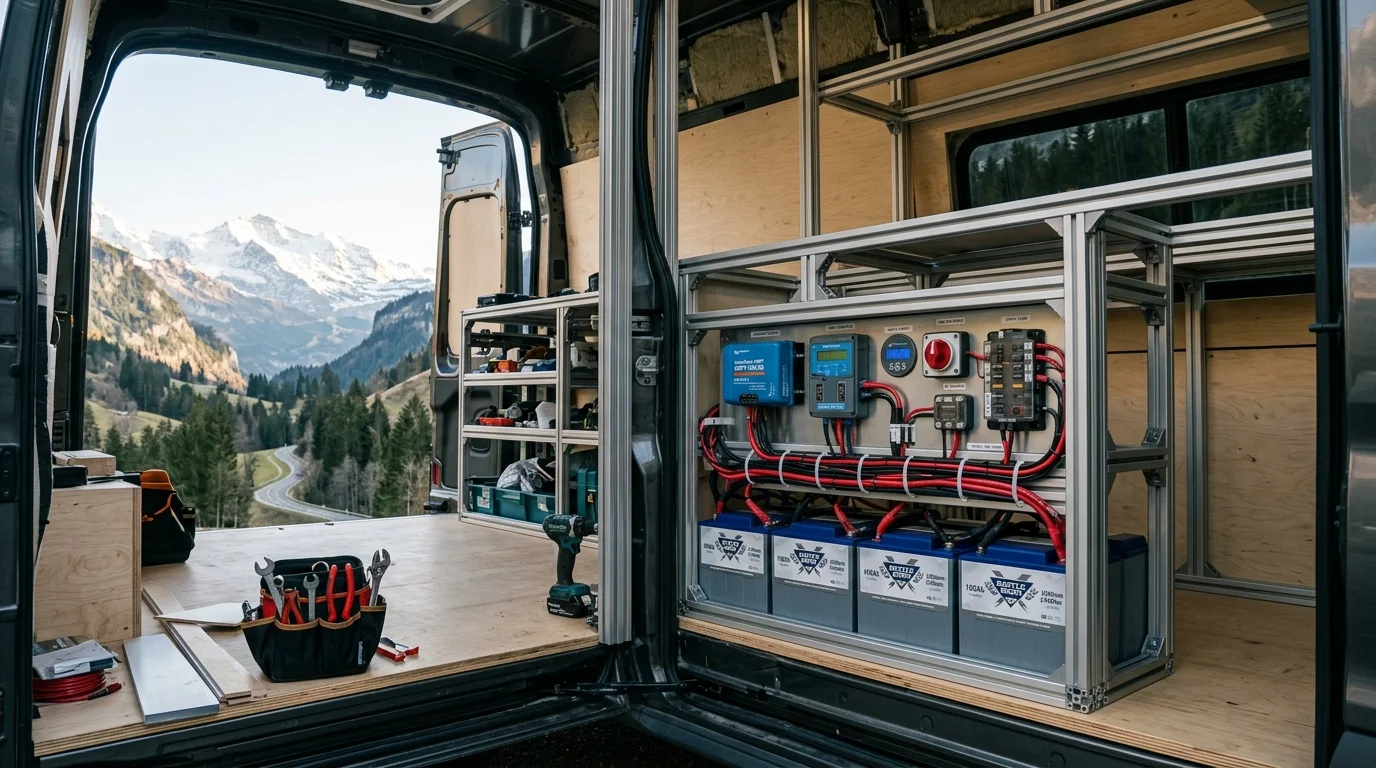
DIY campervan interior workshop build showing aluminum framing and marine electrical wiring harness
AI Visual
Interactive Master Planner DIY & Professional Conversion Matrix

Campervan Conversion Master Planner & Budget Estimator

Model your DIY campervan build across four core off-grid subsystems: electrical, climate control, plumbing, and structural interior. Receive instant real-world cost ranges, build timeline estimates, and payload weight impacts.

Live Build Synthesis Active
Estimated Cost $11,900
Timeline 14 Wks
Payload 1,225 lbs
Quick Presets:
Subsystem 1

Off-Grid Electrical

Subsystem 2

Heating & Ventilation

Subsystem 3

Freshwater & Sanitation

Subsystem 4

Insulation & Cabinetry

Total Build Estimation Live Synthesis
Estimated Conversion Cost
$ 11,900 USD
$10,700 – $13,200 (±10% materials variance)
Timeline 14 Weeks @ 15 hrs / weekend
Added Weight 1,225 lbs Payload allowance OK
Autonomy 3.5 Days Off-grid baseline

How to Plan a Van Conversion: The 4 Core Off-Grid Subsystems

A durable campervan is an integrated thermodynamic and electrical organism. Designing each subsystem with validated engineering margins prevents catastrophic vehicle fires, chronic moisture damage, and mid-winter heating failures.

01

Off-Grid Electrical Architecture

The electrical spine integrates rooftop photovoltaic solar panels, alternator DC-DC charging, and lithium LiFePO4 storage. LiFePO4 delivers flat discharge voltage and safely provides 80% Depth of Discharge across 3,500+ cycles.

02

Heating & Climate Control

Campervan interiors average 350 to 500 cu ft. Unvented propane combustion releases 1.64 lbs of moisture vapor per lb of fuel. Dry externally vented diesel air heaters exhaust moisture outside while drawing only 0.8A to 2.5A continuous fan power.

03

Fresh & Gray Water Plumbing

Baseline consumption averages 2.5 to 3.5 gallons per adult per day for drinking, cooking, and sanitation. Food-grade PEX tubing with brass crimp rings withstands expansion cycles, while under-mount gray tanks require 1/4-inch per foot slope.

04

Thermal Envelope & Framing

A bare steel body has an effective thermal resistance of R-1. Hydrophobic 3M Thinsulate SM600L (R-5.2) and Havelock Sheep Wool (R-7.0) fill chassis ribs without absorbing condensation. Framing with 80/20 aluminum prevents wood-screw pull-outs.

Vehicle Selection: Cargo Van vs. Minivan vs. Step Van

Selecting the base vehicle chassis establishes strict physical constraints for standing interior height, bed orientation, cargo payload, and fuel economy.

Platform Chassis Max Standing Height Cargo Floor Length Width Between Arches Converted Highway MPG Primary Ergonomic Strength
Ford Transit High Roof 81.5" (6'9") 143.7" (148" Reg) 54.8" 16–19 MPG Tallest standing headroom, available intelligent AWD, extensive US repair network.
Ram ProMaster High Roof 77.1" (6'5") 145.9" (159" WB) 56.0" (Widest) 15–18 MPG Widest flat walls (73" upper width) allows East-West bed without body flares.
Mercedes-Benz Sprinter 79.1" (6'7") 170.0" (170" WB) 53.1" 18–22 MPG Longest cargo length, highest diesel highway economy, proven expedition durability.
Chevy Express 2500/3500 55.0" (4'7") 126.3" (135" WB) 52.7" 14–17 MPG Sub-$8,000 used entry cost, indestructible ladder frame, 10,000-lb max towing.
Toyota Sienna Hybrid 45.0" (3'9") 88.0" (Behind seats) 48.5" 35–36 MPG 36 MPG hybrid efficiency, ultra stealth city parking, runs all-night hybrid A/C.

Off-Grid Van Life & Build Planning FAQ

Clear, factual answers to essential campervan conversion, budgeting, and statutory compliance questions.

01 How much does a DIY campervan conversion cost in 2026?

A functional DIY campervan conversion typically costs between $4,500 for a minimal weekender build (basic 12V battery, portable propane heater, plywood platform) and $14,500 to $28,000 for a full-time, four-season off-grid build featuring 200–400Ah lithium LiFePO4 batteries, rooftop solar, a dry diesel air heater, pressurized plumbing, and 80/20 aluminum framing.

02 How long does it take to convert a campervan yourself?

A first-time DIY campervan conversion requires approximately 180 to 350 active labor hours. When working on evenings and weekends (averaging 15 hours per week), most builders complete their vehicle in 12 to 24 weeks. Sourcing components early and pre-planning electrical schematics eliminates common bottlenecks.

03 What is the best van platform for a camper conversion?

The Ford Transit High Roof offers the highest standing height (up to 81.5 inches) and available all-wheel drive (AWD). The Ram ProMaster delivers the widest straight interior walls (73 inches), allowing an East-West bed layout without fiberglass flares. The Mercedes-Benz Sprinter provides maximum cargo length (up to 189.4 inches) and diesel longevity.

04 What safety standards apply to DIY van electrical builds?

Off-grid mobile electrical systems should follow American Boat and Yacht Council (ABYC E-11) standards and National Electrical Code (NEC Article 551). Key requirements include sizing conductors for no more than 3% critical voltage drop, installing overcurrent fuses within 7 inches of battery terminals, and utilizing stranded marine-grade tinned copper conductors.