
1. The Physics of Mobile Van Insulation: Conduction, Convection & Radiation
Automotive van bodies are engineered from stamped cold-rolled sheet steel varying between 0.8mm and 1.2mm in thickness. Steel has an exceptionally high thermal conductivity (k ≈ 50 W/(m·K)), meaning uninsulated steel conducts heat out of your living space over 1,200 times faster than an equivalent thickness of fibrous automotive insulation (k ≈ 0.04 W/(m·K)).
True four-season thermal performance requires mitigating all three modes of thermal transfer:
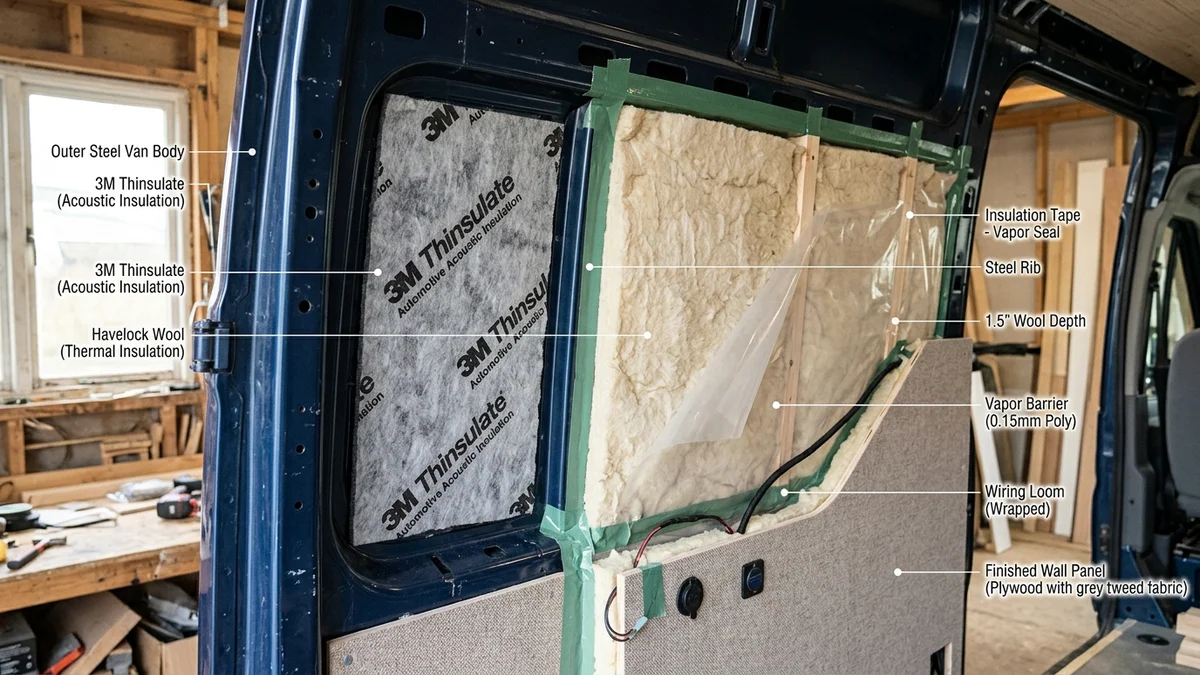
- Conductive Heat Transfer: Controlled by filling the 1.5" to 2.5" wall cavities with bulk thermal insulation (such as 3M Thinsulate or sheep's wool) and isolating steel ribs with thermal break tape.
- Radiant Heat Transfer: Controlled in summer by high-emissivity ceramic roof coatings and radiant window covers with closed-cell foam cores that reflect solar infrared rays back through glass before they heat cabin surfaces.
- Convective Infiltration: Controlled by sealing unconditioned sheet metal penetrations while ensuring continuous mechanical air exchange (0.5 to 1.0 ACH) through ceiling roof fans.
2. The Thermal Bridging Trap: Why 35% of Your Heat Vanishes Through Metal Ribs
In a Mercedes-Benz Sprinter, Ford Transit, or Ram ProMaster, structural hat-channel ribs and ceiling cross-bows comprise approximately 12% to 15% of the total interior skin surface area. If you pack R-7 insulation into the cavity pockets but screw your 1/4" plywood wall panels directly to the bare metal ribs, the ribs act as massive thermal bridges. Heat follows the path of least resistance, bypassing the insulated pockets and bleeding directly into the cold outside air.
The Solution: Always install a physical thermal break. Apply 1/4" closed-cell adhesive neoprene/EPDM foam tape along the face of all sheet metal ribs, or fasten 1/2" Baltic birch furring strips decoupled from the metal using nylon washers. This simple intervention increases total assembly thermal resistance by up to 28%.
3. Psychrometrics & Dew Point: How to Avoid Concealed In-Wall Mold & Rust
Condensation is governed by the laws of psychrometrics. Two sleeping human adults exude approximately 1.5 to 2.0 pounds (0.7 to 0.9 liters) of water vapor overnight through respiration and perspiration. Cooking on an indoor stove releases another 1.0 to 1.5 pounds of water vapor.
If cabin air is at 70°F (21°C) with 50% relative humidity, its psychrometric dew point is 50.5°F (10.3°C). If outside temperatures drop to 25°F (-4°C), the outer van sheet metal drops to roughly 28°F to 32°F—far below the dew point. If warm cabin air penetrates behind your wall paneling and touches that sub-freezing steel, moisture immediately condenses into liquid water.
Why Plastic Vapor Barriers Fail: In residential homes, vapor barriers work because the exterior sheathing (housewrap) is vapor-permeable, allowing walls to dry toward the outside. In a van, the exterior steel wall is 100% vapor-impermeable. If moisture leaks through small holes in an interior plastic vapor barrier (around wiring conduits, screw holes, or plumbing runs), it becomes permanently trapped against the steel with zero sunlight or airflow, triggering corrosion and toxic black mold.
The Engineered Best Practice: Use breathable, hydrophobic insulation like 3M Thinsulate SM600L (which absorbs less than 1% water by weight) or moisture-buffering Havelock Wool. Do not seal with plastic poly sheets. Maintain active low-speed continuous ventilation via a MaxxAir roof vent cracked 1 inch, expelling moisture vapor before relative humidity exceeds 50%.